

The seven-piece Japanese psych-rock group’s new album, Hagata, is an ode to experimentation.
By: Sun Noor
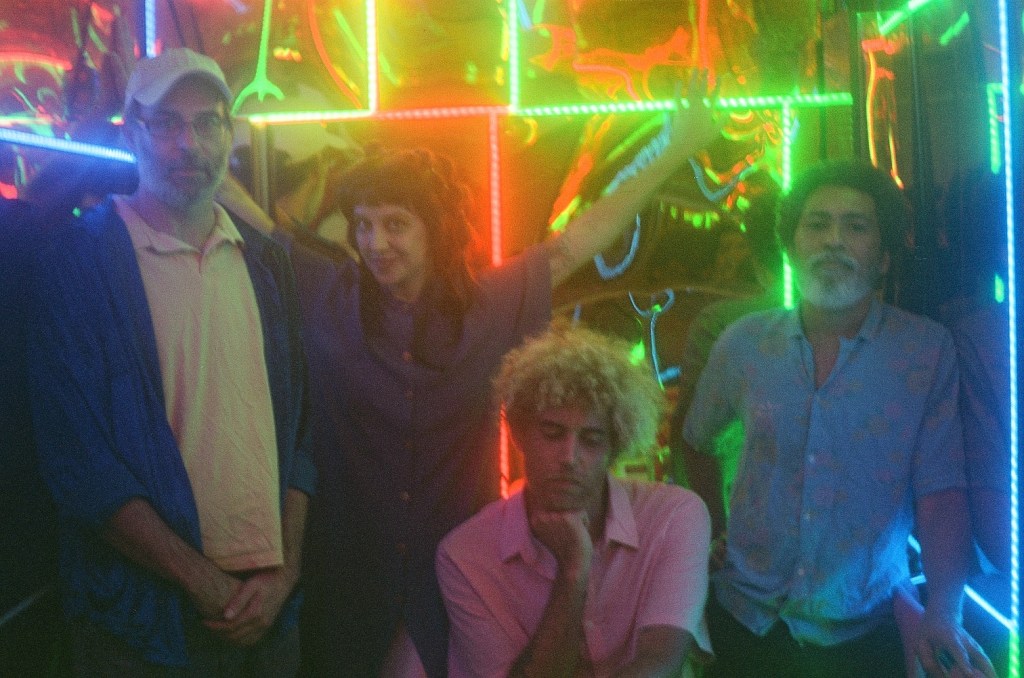
TEKE::TEKE are undoubtedly among Montreal’s most eclectic bands. Comprised of vocalist and visual artist Maya Kuroki, guitarists Sei Nakauchi Pelletier and Hidetaka Yoneyama, bassist Mishka Stein, percussionist Ian Lettre, flutist Yuki Isami, and trombone player Etienne Lebel, the septet create a unique sound, heavily inspired by ’60s and ’70s-era Japanese music and psychedelia. Experimentation is a key factor in their creative process. From roaring guitars and pulsating drums, paired with Kuroki’s idiosyncratic vocal delivery, TEKE::TEKE have made continuous evolution their mission.
The band released sophomore album, Hagata, on June 9th via the legendary Kill Rock Stars Label, presenting an entrancing body of work. Building off of their signature psychedelic rock sound, TEKE::TEKE implements elements of Brazilian surf rock and Japanese pop into the kaleidoscopic mix.
Ahead of Hagata’s release, I caught up with guitarist Sei Nakauchi Pelletier to discuss the making of the album, harnessing cosmic energy in the studio, and the cloud that inspired its ambiguous title.
Hagata is only days away from being released. How are you feeling?
“Very excited. Yeah,I mean it’s it’s really exciting. It’s funny because you know, it’s not like we’re doing a big release party or anything like that. We have a show on July 7th at the Montreal Jazz Fest,. That’s going to be more of like the album release show in a way. So it’s not tomorrow but Friday for release day. We’re just going to hang out at a local record store that we like, and people are just going to come in and hang out as well, and listen to the album, and in the store and hopefully, get a few copies.”
How long did it take to make the album?
“So Hagata, it was a weird process because it was a bit different from the first album, Shirushi, the way we work. Also, I remember at some point, we were on tour and we weren’t sure if we were going to record like a just an EP or a whole album. I remember that clearly. You know, speaking with the label and everything, I just decided okay, we’re gonna do we’re gonna go for a full length again. And I just remember like, we didn’t have that much time to work on songs. And a lot of it was we worked on the songs while touring, which was something that we hadn’t done before.”
“The way we did it is that I brought in like chunks of songs and I kept it that way on purpose so that we work on them together. And that’s the big difference between this one and the first album.
“The first one (Shirushi) had like a lot of songs kind of figured out and we kind of like deconstructed everything together and the pieces back together again all seven of us. This time I knew that if I kept it apart like that it would be easier to just put them together. had everybody bring in some ideas in between stuff. It feels like it happened pretty fast.”
I read that you guys went into the process and decided to experiment with the instrumentation. Was that’s something that was intentional because of timing? Or is that how you guys always work?
“There was a lot of experimentation in the in the studio actually. As far as like, gear, and pedals, and synths. We kind of like kept that stuff for for the studio. We focussed a little more on the structures and we wanted to those pieces together, which is why we chose to work with Schlett (Daniel Schlett). We knew that there would be room for that at the studio and he was a big part of it too, co-producing and letting us try stuff just on the spot in the studio. So yeah, it was nice.”
“To experiment more in the studio and have a little more time than with Shirushi for instance. We had,I think four or five days to record everything. So we’d like to record with like everybody together and you know we had like booths for the trombone and the flute. We try to get as much as we can we laid down together live and then we just add stuff overdubs. Then we start experimenting and having fun with different sounds and gear.”
How was working with Daniel Schlett?
“It was great. I had a feeling just from the first few sessions that we had that he going to be easy to work with and fun. He’s a really big music lover and it was just a good match. I was expecting that just from like knowing the work that he’s done with different projects. He really has like a wide range of different genres and different bands that he’s worked with. And so that was part of the reason why I wanted to work with him.”
Did you have a specific vision throughout the process that you wanted for the record?
“Well, I guess nothing that was like pre-conceived. it was just you know, putting the pieces together. That’s something that happens kind of naturally Especially with Maya’s lyrics and the whole idea behind the title for the album, and just the way the songs came together. It just kind of happens and but when it feels like it happens naturally and organically then it feels like that’s the right thing and should be that way.”
Listening to both Hagata and Shirushi, I feel as though you guys are constantly expanding your sound with like new textures. A lot of the songs fuse various different genres together. Take me through that process.
“The goal is always to expand and the explore, which is kind of the purpose of doing this. If we go back to like how the band started, just from the tribute aspect of it to the first albums already kind of a big step there. I feel like we can go anywhere and that’s the fun part of it and to keep it creative. But then at the same time, because it’s still seven people It feels like we always keep it ‘TEKE::TEKE.‘”
“We would know if something doesn’t feel right or but again, all of that is also very abstract. I feel like with Hagata we just kind of explored more and and also everybody was way more involved in this one. For instance, with Yuki and the trombone player, a lot of what they’re playing is like stuff that they written and everybody was more involved. I feel that was the main reason why it expanded in with this wide range of sounds, and vibes. Hopefully we just keep expanding, expanding and exploring.”
Were there any tracks on the album that you were unsure about at the beginning?
“Oh, wow. That’s an interesting question. Well, I mean, you have to go to certain place with the song to know if it’s gonna work.Maybe “Gotoku Lemon,” which is more maybe kind of new territory for TEKE::TEKE. The main point with that song was to like go places with for instance, the vocals I would hear Maya doing some really cool stuff, more experimental stuff with other projects sounds like it’d be cool to use that in TEKE::TEKE song. More of like dissonant and not melodic vocal parts. At the beginning, it was really an experiment. I didn’t know where it will go and I remember working on that one in the studio. I guess at the very beginning, I didn’t know if it’s going to work. I just had this idea of like using these more experimental influences and putting some electronic sounds.”
It also creates a very nice contrast on the album also with like its placement.
“yeah, contrasts are cool, they’re fun. It’s something we like to work with. Like even within a song, but definitely within tracklist or pacing.”
Yeah and one of my favorite tracks on the album is “Kakijyu.”
“That’s one of my favorites too!”
It has a very pleasant contrast from most of the songs and I really like how it builds up gradually. Can like tell us a little bit about that song?
“That one was kind of like on “Onaji Heya,” I didn’t know what was going to happen with that idea. Basically, I’d heard Yuki doing some solo stuff at concert. She played some contemporary music mixed with pieces by Japanese modern composer. A lot of these sound with the flute we’re really experimental and non-melodic and very kind of windy. I thought it was really great and wanted to incorporate that into TEKE::TEKE. It was a lot of loops with percussion. The melody to me, almost feels like a nursery rhyme with the vocals. It’s like something you could repeat. You put all these elements together and then you have the flow of the song that’s just starting to happen and then you just kind of follow that flow. It’s almost kind of like some kind of power that’s not us. It’s like it comes from somewhere else. It’s cosmic.“
Is there a story behind the album title? I read that the term translates to something that is present yet no longer here? Can you expand on that?
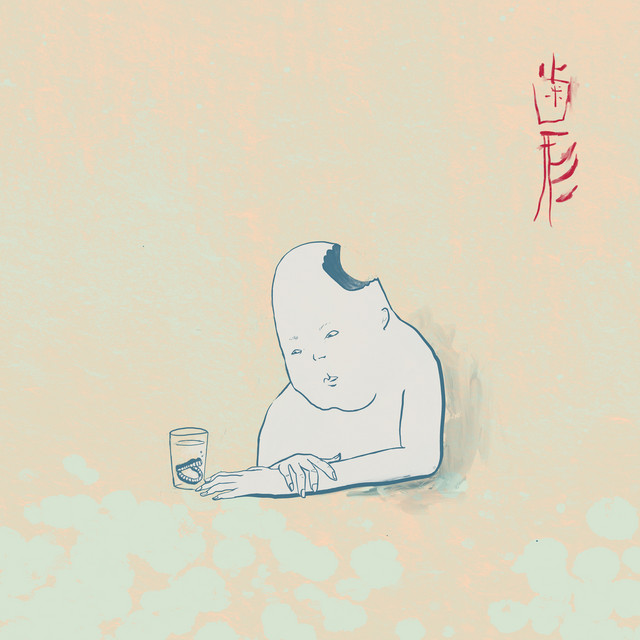
Actually, “hagata” means bite mark. What you just said is kind of like what we’ve developed philosophically behind it that meaning . That’s the interesting part for us about the bite mark. Maya had that idea when she was looking at the sky while we were in the van. She saw the big cloud and looked like it had a big bite mark in it. As she started thinking about that fact that a bite mark is something that’s you see that’s not there, but that there was something there. That’s how we came with the idea. We thought it would fit well with the album as a whole. It kind of makes sense to think about it as how the band started and key influences from the ’60s and ’70s but then moving forward. It’s (the music) like something that was there, but it’s not there anymore.”
TEKE::TEKE’s Hagata is now available worldwide.
The band has a few Canadian festival appearances lined up in July, at the Montreal International Jazz Festival, Festival d’été du Québec and at Ottawa Jazz Festival. Check out the full list of dates here.


 FOR THE RECORD